
Horry County Circuit Court Overview
The Circuit Court is South Carolina's general trial court. It hears the cases that matter most in terms of money, liberty, and lasting legal effect. In Horry County that means big civil suits, felony prosecutions, and many appeals from the lower summary courts. The court has two distinct sides. One side, the Court of Common Pleas, handles civil disputes. The other side, the Court of General Sessions, handles criminal matters. Both sides sit in the same county judicial complex and use the same clerk for filings. The South Carolina Judicial Branch Circuit Court page lays out this structure for all of the state's circuits.
South Carolina runs a unified court system. Trial courts are split by subject, not by a string of numbered branches. So Horry County does not have a long list of numbered Circuit Court divisions the way some states do. Instead it has resident Circuit judges who rotate and a fixed set of lower courts beneath them. The full picture is easier to read once you see who staffs each court and where each one sits. That table is below.
Common Pleas and General Sessions in Horry County
The two sides of the Horry County Circuit Court do very different work. The Court of Common Pleas is the civil side. It hears suits over contracts, personal injury, property, business disputes, and money claims that pass the magistrate limit. The Court of General Sessions is the criminal side. It hears felonies and the more serious misdemeanors that the lower courts cannot dispose of on their own. Both sides share a case index, so a name search can pull civil and criminal matters at once.
A quick way to keep the two straight is to look at the case label. Common Pleas cases carry a civil style with a plaintiff and a defendant. General Sessions cases carry the State of South Carolina as the prosecuting party. The terms below come up often when reading either kind of file.
- Common Pleas
- The civil division of Circuit Court. It handles lawsuits, not crimes.
- General Sessions
- The criminal division of Circuit Court. The State brings the charge here.
- Plaintiff
- The party who files a civil suit and asks the court for relief.
- Disposition
- The final result of a case, such as a verdict, plea, or dismissal.
Note: a single person can appear on both sides of the index, once as a civil party and once in a criminal case, so always check the court type on each result.
Horry County Courts and Judges
The county judicial system is more than just the Circuit Court. It runs from the resident Circuit judges down through Family Court, Probate, the Master-In-Equity, and the magistrate and municipal courts spread across the county. The state judiciary publishes the official roster of these courts and the people who staff them. The list below gathers the main Horry County courts and officials with their mailing or street address and phone, drawn from the South Carolina Judicial Branch Horry County directory.
| Court / Official | Address | Phone |
|---|---|---|
| Horry County Courthouse | 1301 Second Avenue, Conway, SC 29526 | 843-915-5080 |
| Clerk of Court Renee N. Elvis | P.O. Box 677, Conway, SC 29528-0677 | 843-915-5080 |
| Register of Deeds Marion Dargan Foxworth | P.O. Box 470, Conway, SC 29528 | 843-915-5430 |
| Circuit Judge David P. Caraker Jr. | 1301 Second Avenue, Conway, SC 29526 | 843-915-6709 |
| Circuit Judge B. Alex Hyman | 1301 2nd Avenue, Suite 3A30, Conway, SC 29526 | 843-915-6696 |
| Circuit Judge Benjamin H. Culbertson | 401 Cleland St., Georgetown, SC 29442 | 843-545-3030 |
| Family Judge Melissa J. Buckhannon | Horry County Judicial Center, P.O. Box 677, Conway | 843-915-8989 |
| Family Judge Melissa M. Frazier | P.O. Box 677, Conway, SC 29528 | 843-915-8997 |
| Family Judge Jan B. Bromell Holmes | 401 Cleland Street, Suite 238, Georgetown | 843-545-3035 |
| Master-In-Equity Alan D. Clemmons | P.O. Box 1236, Conway, SC 29528 | 843-915-5310 |
| Probate Judge R. A. Beverly Jr. | P.O. Box 288, Conway, SC 29528-0288 | 843-915-5370 |
| Aynor Magistrate Court | 640 9th Avenue, Aynor, SC 29511 | 843-915-5296 |
| Conway Magistrate / Central Traffic | 1201 Third Avenue, Conway, SC 29526 | 843-915-5070 |
| Domestic Violence Court | 1201 Third Avenue, Conway, SC 29526 | 843-915-5290 |
| Horry County Bond Court | 4150 J. Reuben Long Ave, Conway | 843-915-5145 |
| Little River Magistrate Court | 107 Highway 57 North, Little River, SC 29566 | 843-915-5292 |
| Loris Magistrate Court | 3817 Walnut Street, Loris, SC 29569 | 843-915-5295 |
| Mt. Olive Magistrate Court | 5527 Highway #9, Green Sea, SC 29545 | 843-915-5294 |
| Myrtle Beach Magistrate Court | 1201 21st Avenue North, Myrtle Beach, SC 29577 | 843-915-5293 |
| Surfside Beach Magistrate Court | 9630 Scipio Lane, Myrtle Beach, SC 29588 | 843-915-5291 |
| Atlantic Beach Municipal Court | 717 30th Avenue South, Atlantic Beach, SC 29582 | 843-663-2284 |
| Aynor Municipal Court | 600 South Main Street, Aynor, SC 29511 | 843-358-6231 |
| Conway Municipal Court | 229 Main Street, Conway, SC 29523 | 843-248-1765 |
| Loris Municipal Court | 3817 Walnut Street, Loris, SC 29569 | 843-756-6674 |
| Myrtle Beach Municipal Court | 1101 Oak Street, Myrtle Beach, SC 29577 | 843-918-1356 |
| North Myrtle Beach Municipal Court | 1015 2nd Avenue South, North Myrtle Beach, SC 29582 | 843-280-5520 |
| Surfside Beach Municipal Court | 210 U.S. Highway 17 South, Surfside Beach, SC 29575 | 843-913-6338 |
The three resident Circuit judges, David P. Caraker Jr., B. Alex Hyman, and Benjamin H. Culbertson, serve the whole Fifteenth Circuit. Judge Culbertson keeps chambers in Georgetown, which shares the circuit with Horry. Judges rotate among the counties and case types, so the judge who signs an order may not be the one who later hears the trial.
Horry County Circuit Court on the State Site
The state judiciary keeps a plain-language page for each trial court. These pages are the best official source for what each court can and cannot do. To see how the state describes the top trial court, visit the South Carolina Circuit Court overview.
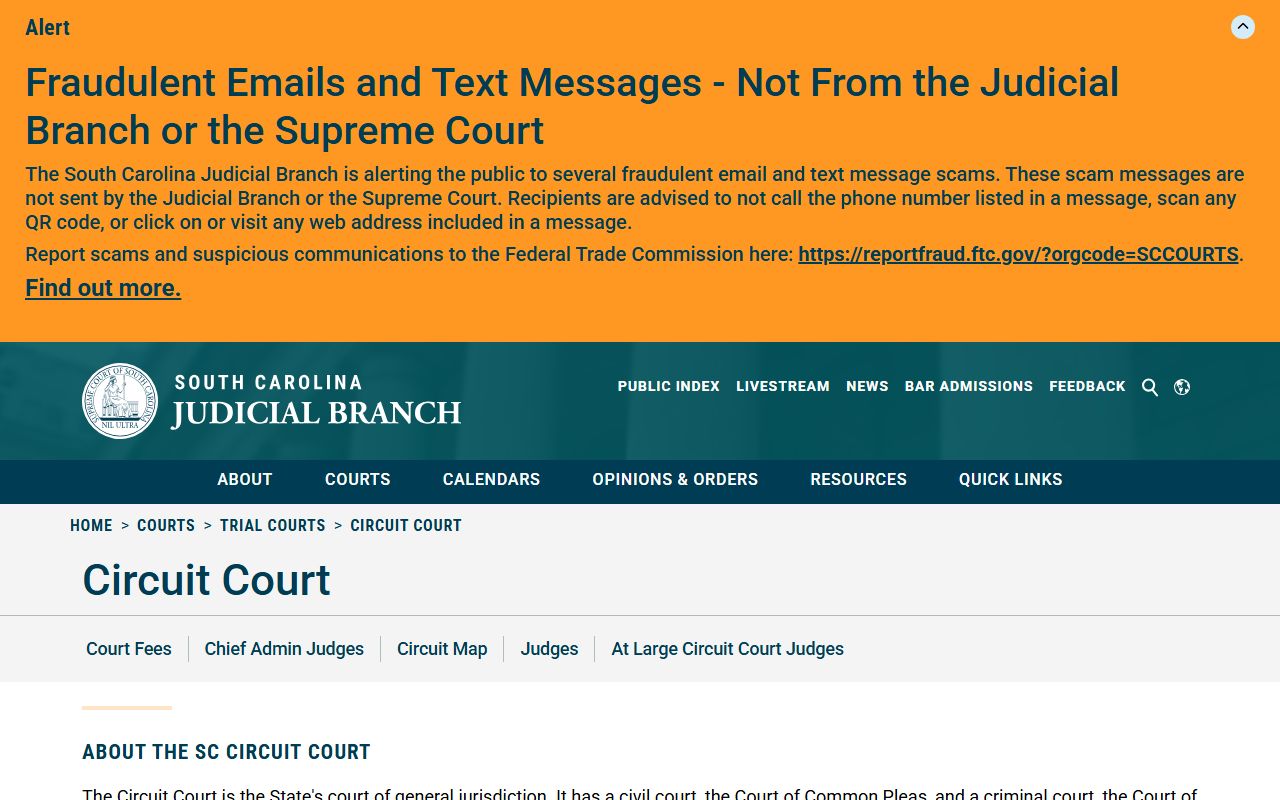
The page confirms the split between Common Pleas and General Sessions and notes that appeals from Probate, Magistrate, and Municipal courts can land in Circuit Court. Family Court is a separate trial court, not a piece of the Circuit Court. The state explains its reach on the South Carolina Family Court page.
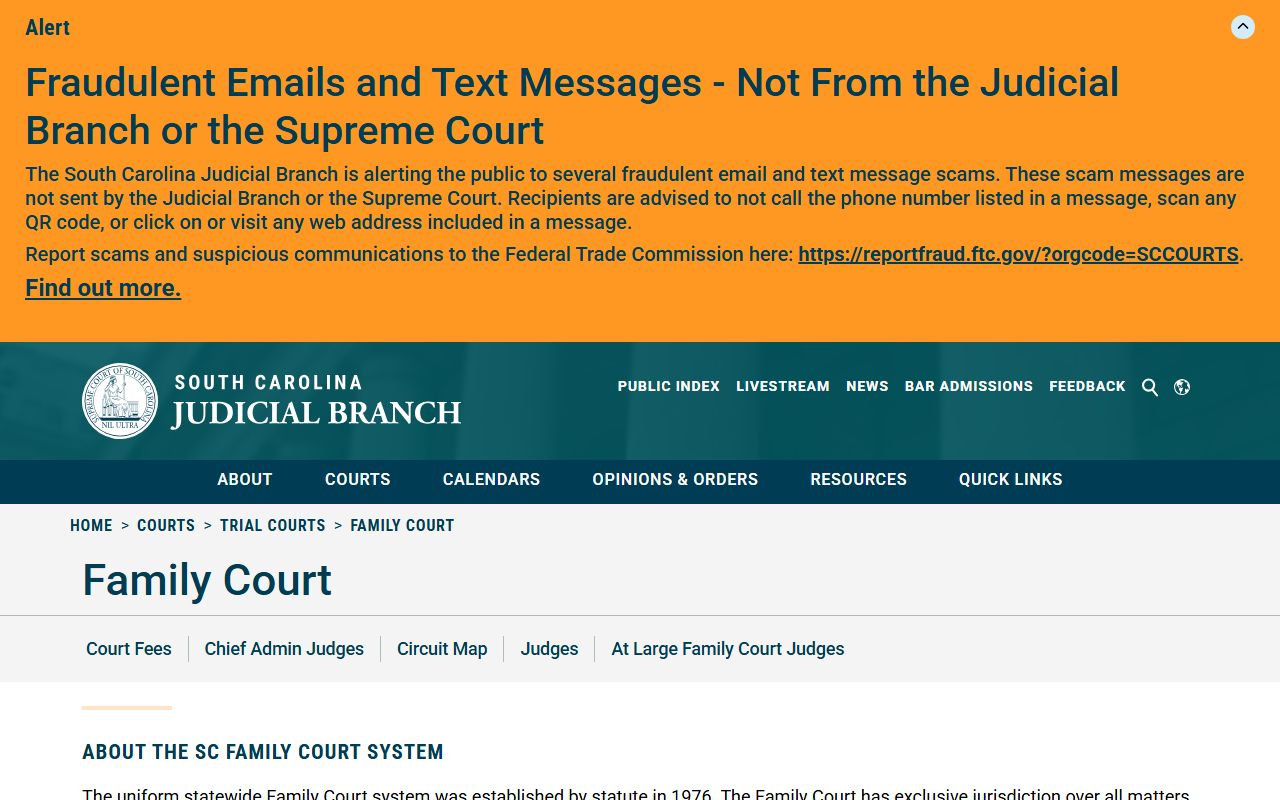
Family Court covers divorce, custody, child support, adoption, name changes, and juvenile cases. Those files do not sit with the Circuit Court even though both use the same Clerk of Court. Below the Circuit level sit the summary courts, and the magistrate court does the bulk of the day-to-day volume.
Circuit Court vs Magistrate Court vs Municipal Court
Horry County residents often file or face cases in the lower courts long before anything reaches the Circuit level. Knowing which court handles what saves time and keeps a record search pointed at the right index. The table sets the three trial courts side by side on the points that matter most.
| Circuit Court | Magistrate Court | Municipal Court | |
|---|---|---|---|
| Case Types | Major civil suits and felonies | Small civil claims and minor crimes | City ordinance and minor crimes |
| Civil Dollar Limit | No fixed ceiling | Up to $7,500 | No civil jurisdiction |
| Criminal Scope | Felonies and serious misdemeanors | Lower-level offenses, warrants, bail | Ordinance and qualifying offenses in city limits |
| Appeals Go To | Court of Appeals | Circuit Court | Circuit Court |
The magistrate court is the workhorse of the lower level. It sets bail, issues warrants, holds preliminary hearings, and decides claims up to seven thousand five hundred dollars. The South Carolina Magistrate Court page spells out those limits in full.
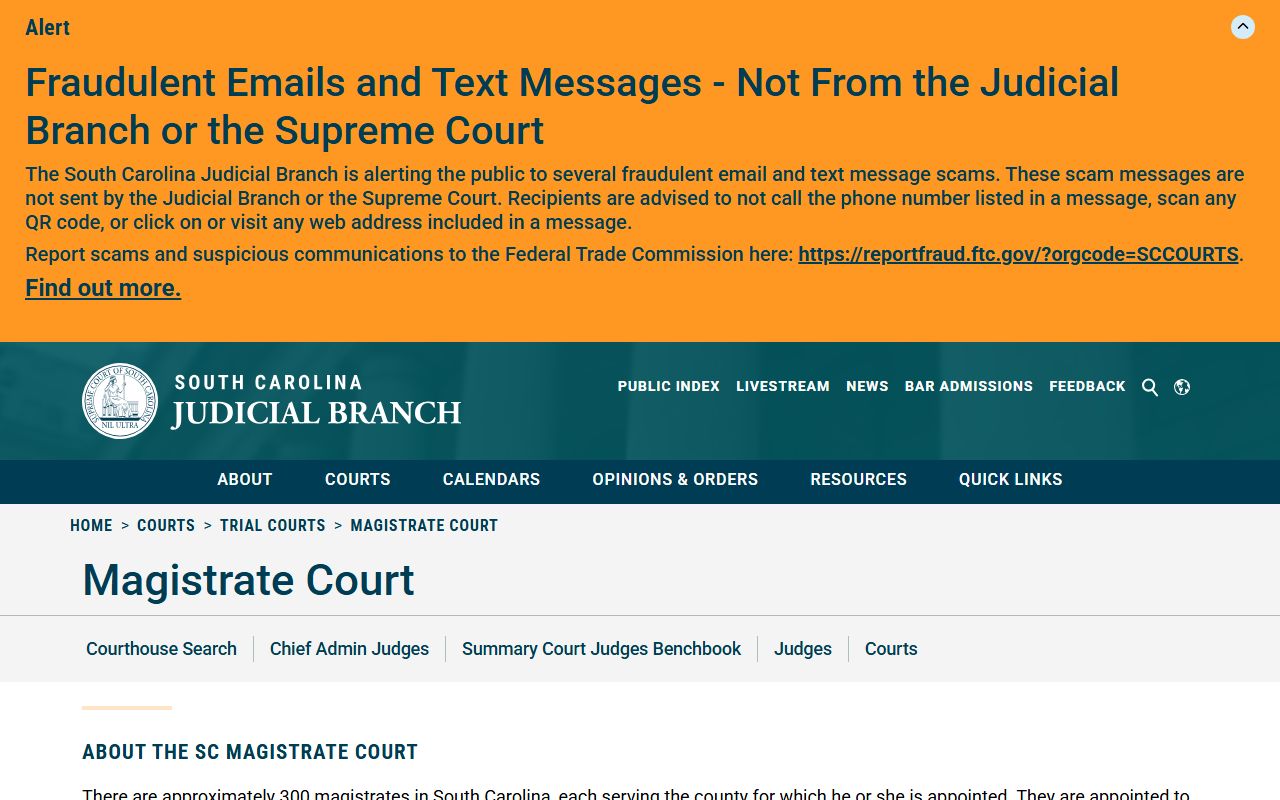
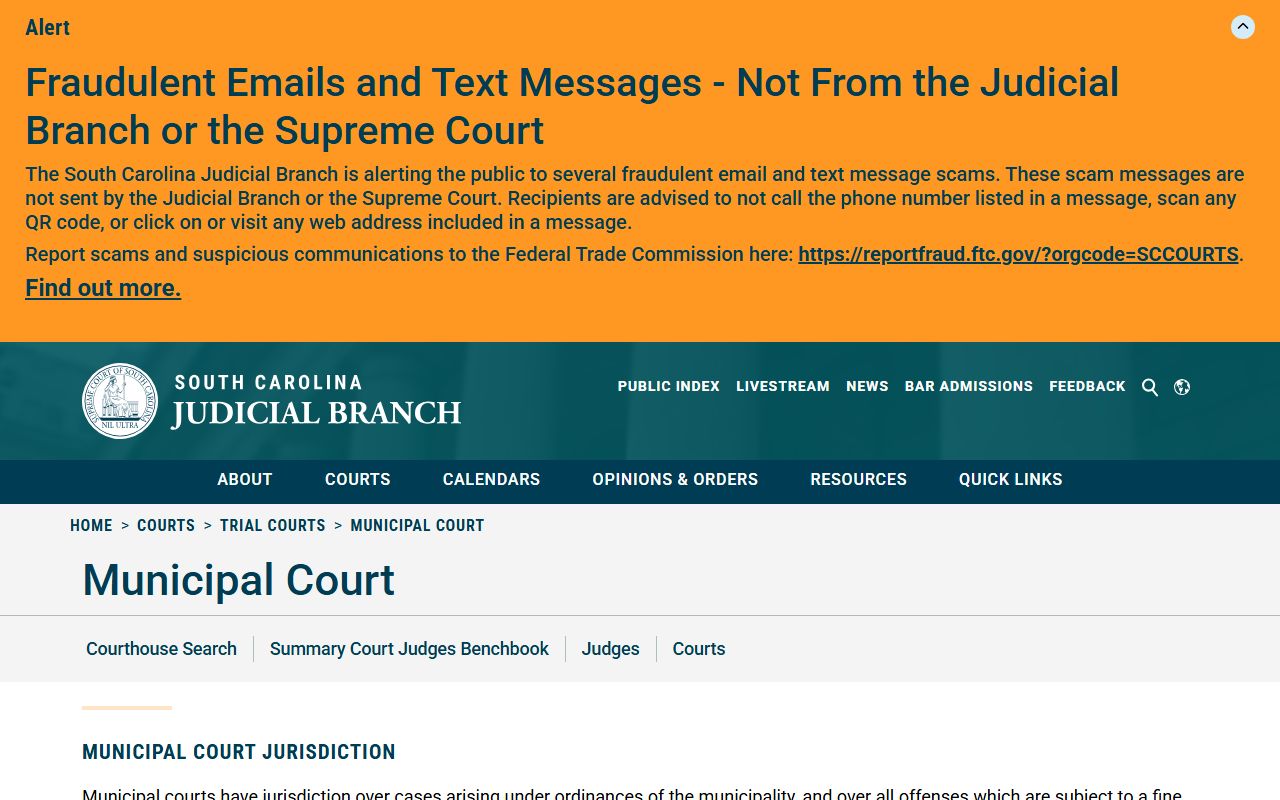
Magistrates are appointed, not elected, and the county runs several across towns like Conway, Loris, Little River, and Myrtle Beach. Municipal courts work only inside city or town limits. They cannot hear civil suits at all. The South Carolina Municipal Court page describes their narrow ordinance role.
For deeper detail on the lower courts, see the Horry County Magistrate Court page. Its rules, fees, and locations differ from the Circuit Court in ways that affect how you file and search.
How a Case Moves Through the Horry County System
Cases do not start at the top. Most begin in a summary court or with an arrest, then climb only if the stakes or the appeal demand it. The two short flows below show the common path for a criminal matter and a civil one. They are general maps, not strict rules, and any single case can skip or repeat a step.
- Criminal: Arrest › Magistrate Bond Hearing › Preliminary Hearing › General Sessions Indictment › Trial or Plea › Sentencing › Appeal
- Civil: Complaint Filed in Common Pleas › Answer › Discovery › Mediation › Trial › Judgment › Appeal
The appeal path runs the same way for both. From a magistrate, municipal, or probate court, an appeal goes up to the Circuit Court first. From the Circuit Court it goes to the Court of Appeals, and from there it can reach the South Carolina Supreme Court. In short: Magistrate, Municipal, or Probate › Circuit Court › Court of Appeals › Supreme Court.
Note: not every case can be appealed, and strict deadlines apply, so anyone weighing an appeal should confirm the timing with the clerk or an attorney first.
Master-In-Equity and Circuit Court Referrals
The Master-In-Equity is a division of the Circuit Court, not a separate court. A Circuit judge can refer certain matters to the Master under an order of reference. Most of that work is equity-heavy, with foreclosures making up a large share. The Master can hear evidence, rule on motions, and enter orders within the bounds set by the reference. The South Carolina Master-In-Equity page describes how this division fits inside the Circuit Court.
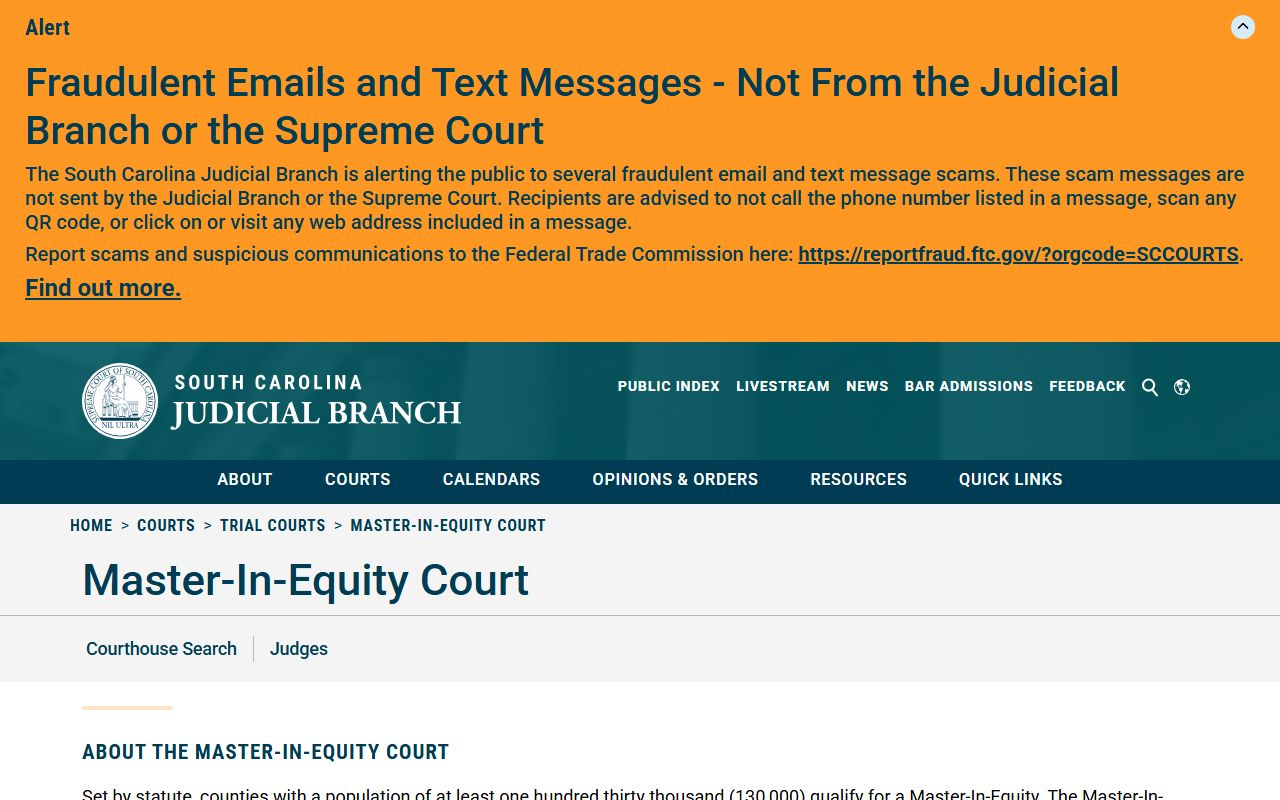
Horry County qualifies for a Master-In-Equity by population, so it has its own. For foreclosure files, sale dates, and the Master's referred cases, see the Horry County Master-In-Equity Court page. Those records show up in the same Public Index as other Circuit matters, just under a different case type.
Horry County Circuit Court Courthouse
The Circuit Court sits in the county judicial complex in Conway, the county seat. The same building holds Family Court, Probate, the Solicitor, the Public Defender, and the Clerk of Court. Most record requests and filings for the civil and criminal sides start at the Clerk's main counter. A second Clerk office on the South Strand serves the Myrtle Beach side of the county. Parking and security rules can change, so confirm what you need before you go.
1301 Second Avenue
Conway, SC 29526
Clerk of Court: 843-915-5080
Mon-Fri 8am-5pm
The Solicitor for the Fifteenth Circuit, Jimmy Richardson, prosecutes General Sessions cases out of the same Conway address. The Fifteenth Circuit Solicitor page covers his Horry and Georgetown jurisdiction. For day-to-day filing help, the Horry County Clerk of Court page lists forms, hours, and request methods in detail.
Searching Horry County Circuit Court Records
Circuit Court files are public for the most part, and the main way to find them online is the state Public Index. It pulls Common Pleas, General Sessions, Family, Magistrate, and Municipal cases for the county into one search. The tool is free. It does need cookies and JavaScript turned on, and it makes you accept a disclaimer and type a security code before it will run a search. You can search by name, case number, court type, case type, or date range.
- Open the Horry County Public Index and pick the county.
- Read and accept the disclaimer that appears.
- Type the security code, then click Validate. Pressing Enter will not work.
- Enter a name, case number, court type, or date range and run the search.
- Click a case number to open the parties, charges, and any posted document icons.
As of January 1, 2026, home addresses were removed from the Public Index, so older results may show less personal detail than before. The state explains the system and that change on its case records search page. For published court dates and roster lists, the county also posts court rosters online.
The Public Index is good for tracking a case, but it does not replace a certified copy. Document images are not posted for every case, and a court still requires certified copies from the clerk for legal use. For a fuller walkthrough of record types and what each file shows, see Horry County court records and the court dockets page. Anyone who needs an official copy should contact the Clerk of Court directly.