
How to Look Up Horry County Jail Population Data
The Horry County jail population count comes from one official place. The Horry County bookings app runs a live inmate count behind the scenes. It serves a male total, a female total, a combined total, and a timestamp that marks when the data was last collected. The app is the same tool the public uses to look up people booked into or released from the J. Reuben Long Detention Center.
The count is a point-in-time number. It is not an average. It changes through the day as the jail books new arrests and processes releases. When the app last reported, it showed a total of 878 people in custody. That figure broke down as 731 male and 147 female. The timestamp on that pull read May 26, 2026.
Read the count as a snapshot, not a trend. A single number tells you the load on the jail at one moment. It does not tell you the year's average, the legal status of each person, or how full the building is. Those are separate questions, and the county does not answer all of them in public.
| Field | What It Shows |
|---|---|
| Male | Count of male inmates held at the time of the pull. |
| Female | Count of female inmates held at the time of the pull. |
| Total | Combined number of inmates in custody. |
| Last Collected | Timestamp marking when the count was last refreshed. |
Note: the live count gives a current head count only, so it cannot stand in for an average daily population or a measure of how full the jail is.
Horry County Jail Capacity Overview
People often ask how many beds the Horry County jail holds. The honest answer is that the designed capacity is not published in the official current sources the county posts online. The J. Reuben Long Detention Center page describes its mission, its director, and its services, but it does not list a bed count. Without that number, you cannot turn the live count into a fill rate.
That gap matters. A raw count of 878 means little on its own. To know if a jail is crowded, you need its rated capacity, and Horry does not post one. The table below lists the county's detention facility and marks capacity as not published. Treat any capacity figure from an outside site with care unless it traces back to the county or the state.
| Facility | Address | Function | Published Capacity |
|---|---|---|---|
| J. Reuben Long Detention Center | 4150 J. Reuben Long Ave., Conway, SC 29526 | County jail, booking, bond court, inmate services | Not published |
The county does signal that crowding is a concern. Its inmate programs state a goal to reduce jail overcrowding through reentry work and supervision. That points to capacity pressure even though no exact bed number is posted.
Average Daily Population
Average daily population, often shortened to ADP, is the mean number of inmates held across a full period. It smooths out the daily swings that a single snapshot misses. Horry County does not publish a local ADP figure on its detention pages. The live app gives a current count, not an average.
Because the local ADP is not published in official sources, the right way to think about it is through national jail data. The federal Bureau of Justice Statistics tracks ADP for jails across the country in its annual jail reports. Those reports show how counts rise and fall and how local jails compare in size. They do not break out Horry County by name, but they set the frame.
Until Horry posts its own average, the 878 figure is the best public local data point, and it is a single moment in time. Do not read it as a yearly average. A jail's count can swing by dozens of people in a week as court terms open and close.
Demographic Breakdown
The official live count gives only a male and female split. There is no public dashboard that sums up age, race, or charge across the whole Horry County jail population. The bookings app does carry richer detail at the individual level. Each booking record can show gender, age, ethnicity, the arresting agency, the charges, bail, disposition, and the booking and release dates.
The limit is the aggregate view. You can open one record and read its fields. You cannot pull a county summary of how many inmates fall in each age band or each race group from the official source. Building that picture would take bulk data the county does not post.
The snapshot below shows the one demographic split the county does publish. It reflects the last reported pull from the bookings app and is a point-in-time count, not an average.
| Group | Count | Source |
|---|---|---|
| Male | 731 | Horry bookings app |
| Female | 147 | Horry bookings app |
| Total | 878 | Horry bookings app |
To view the underlying records that feed these numbers, use the Horry County inmate records page, which covers the full roster lookup.
Pretrial vs Sentenced Population
A jail holds two broad groups. Some people wait for trial and have not been convicted. Others serve a short sentence after a guilty plea or finding. The split between these groups shapes how a jail runs and how long people stay. Horry County does not publish a pretrial versus sentenced breakdown in its official current sources.
This is a common gap at the county level. Many county jails track the split for budget and planning, but they do not post it online. For national context, the Bureau of Justice Statistics reports that a large share of the country's jail population is held before trial rather than after a sentence. That national pattern does not give a Horry County figure. It only shows what the typical jail mix looks like.
So the local ratio stays unknown from public data. The live count of 878 lumps both groups together. Reading it as all-sentenced or all-pretrial would be wrong. Without a county breakdown, neither claim holds up.
Misdemeanor vs Felony Population
Charges range from minor misdemeanors to serious felonies. People often want to know how the Horry County jail population divides between the two. That split is not published in the official count endpoint. The live app reports totals and the male-female split, and nothing about charge severity in the aggregate.
You can sample charge detail one record at a time. Each booking entry lists the charges tied to that person, and many entries name the statute or charge class. But sampling a few records does not produce a reliable countywide percentage. Turning individual charges into a summary would need bulk data the county does not release.
So treat any misdemeanor-to-felony ratio for the jail as unknown from official sources. The charges exist in the records. The summary does not.
Mental Health and Medical Population
Jails carry a medical and mental health load that rarely shows up in a head count. The J. Reuben Long Detention Center runs inmate medical services that include sick call, dental, and mental health requests. Co-pays apply, and care follows HIPAA confidentiality. An inmate can also refuse treatment. None of that produces a public number of how many people in custody have a medical or mental health need.
The county does not publish a mental health population count. South Carolina's court system runs a Mental Health Initiative and treatment courts as alternatives to ordinary jail time, which can move some defendants out of custody. The detention center also runs programs aimed at reentry and lower repeat offending. These efforts hint at need but do not count it.
So the share of the Horry County jail population with a mental health or medical condition is not published in official sources. The services are documented. The counts are not.
Note: medical and mental health care at the jail follows privacy law, so the county does not release how many inmates use those services.
National and State Context
When local data runs thin, national and state sources fill the frame. Two agencies anchor that work. The Bureau of Justice Statistics, part of the U.S. Department of Justice, runs the main national jail and prison data program. Its annual reports cover jail counts, average daily population, pretrial shares, and how counts shift year to year. These figures are national and state level, not a Horry County tally.
The county sheriff is the official source for any Horry-specific figure, while the Bureau of Justice Statistics sets the national baseline a county can be measured against.
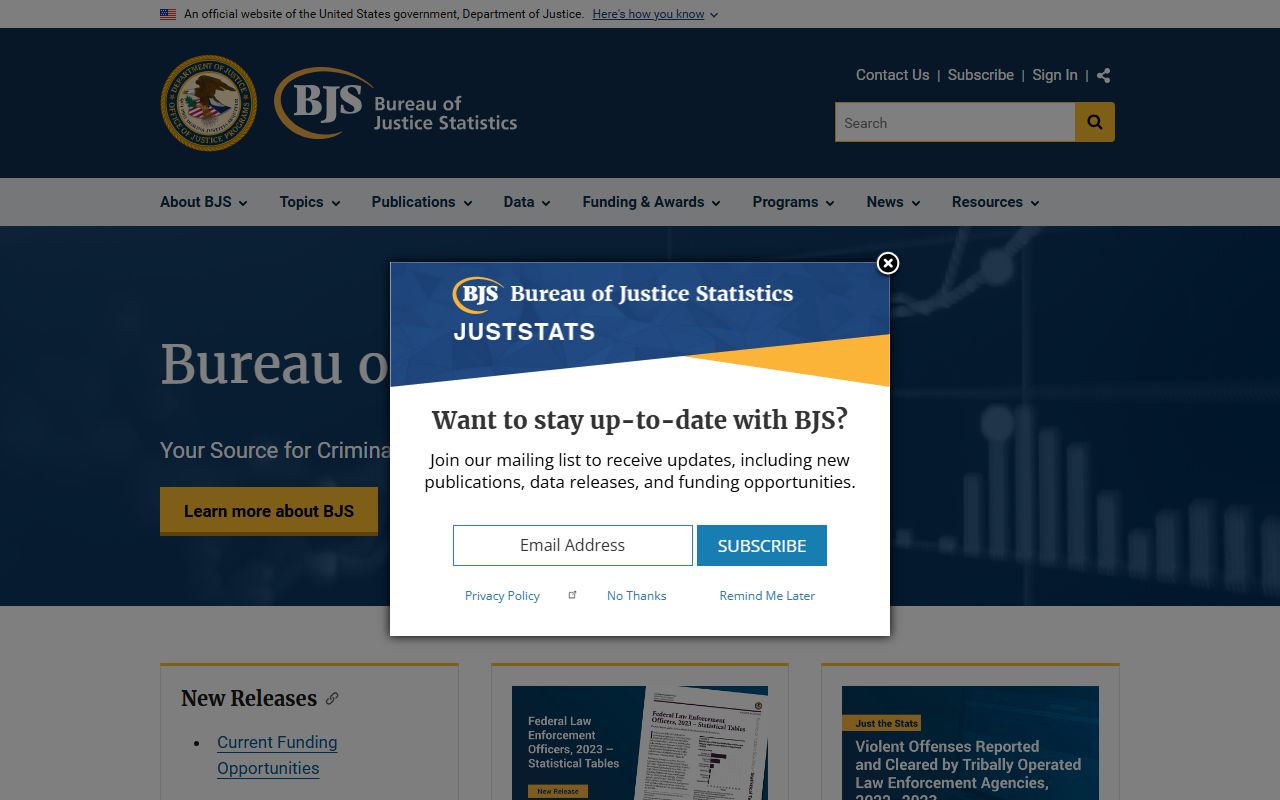
The federal site is where you confirm the national and state numbers that put a local count in scale.
The other anchor is the Prison Policy Initiative, a research group that studies incarceration across the United States. It publishes county and state breakdowns, pretrial detention analysis, and rate comparisons drawn from public data. The Vera Institute also tracks county incarceration trends, though its data page did not load when this page was built, so it is named here only as a further reading source rather than a sourced figure.
The chart-heavy research at the Prison Policy Initiative helps put a single county count next to state and national patterns.

These outside sources are useful for scale, but only the live county count is a verified Horry number.
The comparison below frames the three levels of data. Only the county row carries a sourced figure. The state and national rows are marked because per-100,000 rates for Horry have not been pulled from BJS or Vera and are not posted by the county.
| Level | Figure | Source Status |
|---|---|---|
| Horry County jail | 878 total, 731 male and 147 female, point-in-time | Sourced from the county bookings app |
| South Carolina | Statewide jail rate per 100,000 | Needs BJS or Vera figures; not posted by the county |
| National | U.S. jail rate per 100,000 | Needs BJS figures; not posted by the county |
Do not read a per-100,000 rate into the Horry row. The 878 figure is a raw count at one moment, not a rate, and it is not adjusted for population.
Population Trends Over Time
A trend needs many data points across many months or years. Horry County does not publish a five-year jail population trend table or an average daily population history on its official pages. The live app gives the current count and nothing older. So a local five-year line cannot be drawn from official county data.
Outside groups do track county trends from public data. The Prison Policy Initiative and the Vera Institute both study how county incarceration changes over time. Those sources can sketch a state or national arc. They do not stand in for a county trend table the sheriff has not released.
The county's budget hints at direction without giving numbers. The FY 2025-26 financial plan references the sheriff and detention functions and service goals, and inmate programs aim to reduce overcrowding. That language suggests planning around the load, but it is not a published trend. For now, the safe statement is plain. A Horry County jail population trend over time is not published in official sources.
Searching for Horry County Inmate Records by Name
This page covers population data, not individual lookups. To find one person by name, use the Horry County inmate records page, which walks through the jail roster search. For people recently let go, the released inmates page covers custody status, and arrest detail sits on the arrest records page.
Where the Data Comes From
Every Horry-specific number here traces to one official tool. The Horry County bookings app feeds the live inmate count, the male and female split, and the timestamp. The Horry County Sheriff, Phillip E. Thompson, runs the J. Reuben Long Detention Center, where the count is generated. Director Marcus Rhodes leads the facility.
The county warns that its public booking data may not be complete or fully validated. Read the count as a working snapshot, not a certified report. National and state framing comes from the Bureau of Justice Statistics and the Prison Policy Initiative, which are clearly labeled as outside context rather than Horry County figures.
The detention center sits at 4150 J. Reuben Long Ave. in Conway. Booking questions go to the detention line, and bond and magistrate matters run through the on-site magistrate office. For warrants tied to people in custody, the warrant records page covers the sheriff's warrant division.
J. Reuben Long Detention Center
4150 J. Reuben Long Ave.
Conway, SC 29526
843-915-5140