
What Is a Horry County Court Docket
A docket is the official record of activity in a case. It lists each action in date order. Think of it as the case timeline. Every filing, hearing, motion, and order gets a line. The docket tells you what was done, who did it, and when. It does not always hold the full text of each paper. Many entries are short labels with a date.
The word "docket" gets used a few ways. Sometimes it means the case activity log. Sometimes it means the court's daily or weekly hearing schedule, also called a roster. Both senses matter in Horry County. A judge has a docket of cases set for a given day. A single case has its own docket of past and future steps. The Horry County court records page covers full case files, while this page stays on dockets and rosters.
Court dockets are public for most case types. Civil and criminal dockets in General Sessions and Common Pleas are open. Family Court divorce dockets carry public docket data, but juvenile and adoption matters are sealed. The docket is where you confirm a case is moving and when the next date falls.
What a Horry County Docket Entry Shows
Each docket entry marks one step in the case. The entry names the action, the date, and sometimes the judge or the result. Some entries link to a document image. Many do not. The table below shows common docket actions you will see on Horry County court records, drawn from the actions that appear in the state case index.
| Docket Entry | What It Means |
|---|---|
| Complaint Filed | The first pleading that starts a civil case. |
| Summons Issued | Notice to a party that they must answer or appear. |
| Answer Filed | The defendant's written response to the complaint. |
| Motion Filed | A written request for the court to rule on something. |
| Hearing Scheduled | A date set for the court to hear the matter. |
| Order Entered | A judge's written ruling on a point in the case. |
| Judgment | The final or enforceable decision in the case. |
| Continuance | A hearing pushed to a later date. |
| Disposition | The outcome of a charge or the whole case. |
Criminal dockets add their own steps. You may see an indictment, an arraignment, a plea, a sentence, or a bond action. Foreclosure dockets show a lis pendens and a sale date. The exact labels shift by court and case type, but the pattern holds. Each line is one move in the case.
Note: a docket entry is a short record of an action, so the full motion or order text often must be pulled from the clerk or the court file.
How to Find Horry County Court Dockets
There are two main free tools. The first is the court roster portal, which posts upcoming hearing schedules by court. The second is the Public Index, which holds the docket of each individual case. Both run on the state judicial system. You do not need an account or a fee for either one. The county's online services hub links to both in one place.
To look up a case docket, the Public Index is the better tool. To see who is on the calendar for a given week, use the court rosters. The steps below walk through a docket lookup on the case index.
- Open the Horry County Public Index or the statewide Case Records Search page.
- Pick Horry County if you start from the state map or list.
- Read the disclaimer and accept it to go on.
- Type the security code and click Validate. Pressing Enter does not work.
- Search by name, case number, court type, or date range.
- Click the case number link to open the docket, the parties, and any document icons.
Your browser must allow cookies and JavaScript. Some browsers need a pop-up exception to open case detail. Start with one or two fields if you do not have the case number. The system matches every box you fill, so too many filters can hide the case you want.
For the weekly schedule view, open the Horry County court rosters portal. It lets you pick a court and date to see the docket of cases set for that session.
Which Horry County Courts Publish Dockets
Most Horry County trial courts post docket and roster data online. The Circuit Court covers both the civil Court of Common Pleas and the criminal Court of General Sessions. Family Court posts dockets for divorce, custody, and support, though sensitive juvenile files stay closed. Magistrate and several municipal courts feed the same state index. The county's seven municipal courts include Atlantic Beach, Aynor, Conway, Loris, Myrtle Beach, North Myrtle Beach, and Surfside Beach.
The court roster portal and the Public Index pull from the statewide case-management system. That means a magistrate traffic case in Conway and a Common Pleas foreclosure both land in the same search tool, just under different court agencies. The table below lists key Horry courts with their address and phone, so you know which office holds the docket you need.
| Court | Address | Phone |
|---|---|---|
| Horry County Courthouse | 1301 Second Avenue, Conway, SC 29526 | 843-915-5080 |
| Conway Magistrate / Central Traffic | 1201 Third Avenue, Conway, SC 29526 | 843-915-5070 |
| Myrtle Beach Magistrate Court | 1201 21st Avenue North, Myrtle Beach, SC 29577 | 843-915-5293 |
| Little River Magistrate Court | 107 Highway 57 North, Little River, SC 29566 | 843-915-5292 |
| Conway Municipal Court | 229 Main Street, Conway, SC 29523 | 843-248-1765 |
| Myrtle Beach Municipal Court | 1101 Oak Street, Myrtle Beach, SC 29577 | 843-918-1356 |
The South Carolina Judicial Branch courthouse page for Horry County lists resident judges and full court addresses. To learn how each court fits the larger system, see the Horry County Circuit Court page and the magistrate court page.
Horry County Clerk Court Rosters
The Horry County Clerk of Court, Renee N. Elvis, posts court rosters as a public service. The Clerk's stated job is to give Circuit and Family Court services to the public in a timely way. The Clerk of Court page links the Public Portal, the Public Index, online payments, juror information, forms, and the weekly and settlement rosters. These rosters are the schedule side of the docket.
Weekly rosters list the cases set for an upcoming term or session. Settlement hearing rosters are kept on their own and split by half-year, with one set for January through June 2026 and another for July through December 2026. Settlement hearings cover minor settlements and death settlements. The Clerk's office schedules these by email.
The Clerk page notes one modern detail. Minor settlement and death settlement hearings are held on set days by WebEx, the video meeting tool, and court attire is required for virtual court. So even a remote hearing follows courtroom dress rules. The Horry County online services portal also gathers the roster and docket links in one spot.
Settlement hearings: The Clerk schedules minor and death settlement hearings via WebEx on set days, and court attire is required for the virtual session.
Docket vs Full Case Record in Horry County
A docket and a full case record are not the same thing. The docket is the index of actions. The full record is the stack of papers behind those actions. The docket tells you a motion was filed on a date. The case file holds the actual motion, with all its pages and exhibits. Both are tied to one case number, but they serve different needs.
The Public Index shows the docket for free. It may also show document icons that open images, but image availability varies by court and by case. Many entries have no image online at all. When you need the full document or a certified copy, you go to the office that holds the file. For Circuit and Family Court, that is the Clerk of Court.
| Point | Court Docket | Full Case Record |
|---|---|---|
| What it is | A list of actions and dates | The complete filed documents |
| Where to find it | Public Index and court rosters | Clerk of Court or the holding office |
| Cost | Free to view online | Copy and certified fees apply |
| Use | Track dates and case status | Read or file the actual papers |
For example, a docket might read "Order Entered." To read what the order says, you request the document from the clerk. Certified copies for legal use always come from the office, not from a screen print. The Horry County Clerk of Court page covers copy requests and fees.
Common Horry County Docket Terms
Docket lines use shorthand. A few terms come up again and again across Horry County court records. Knowing them helps you read a docket without guessing. The list below defines the ones you are most likely to meet on a civil or criminal docket.
- Docket
- The chronological record of all actions in a case.
- Motion
- A written request asking the court to rule on a point.
- Order
- A judge's written decision on a matter in the case.
- Continuance
- A postponement of a hearing to a later date.
- Disposition
- The outcome of a charge or the case as a whole.
- Judgment
- The final or enforceable ruling of the court.
Other entries name a party action, like a complaint or an answer. Criminal dockets add plea, sentence, and bond steps. A status code may appear too. Traffic cases sometimes show a code such as NRVC. When a code is unclear, the clerk or the issuing court can explain it.
Hearing Dates on Horry County Dockets
The most common reason people pull a docket is to find a hearing date. The roster shows which cases are set, and on what day, for a court session. A single case docket shows the next scheduled step for that case. Both lean on the same hearing data. Court roster info includes the date, the court agency, and often the judge.
Hearing dates can change. A continuance moves a date. A new motion can add a hearing. So a date you saw last week may not hold this week. Always confirm a date close to the hearing day. For settlement hearings on the Clerk's roster, the WebEx format means you may appear by video rather than in person.
If you cannot find a hearing online, call the court that holds the case. The Clerk's main line is 843-915-5080. The Conway Magistrate and Central Traffic office is at 843-915-5070. These offices can confirm a date when the online roster has not yet posted it.
Bond Court and Jail Docket Context
Not every court date runs through the Clerk's roster. Bond hearings happen at the detention center. The Horry County Bond Court sits at the J. Reuben Long Detention Center on J. Reuben Long Avenue in Conway, and a magistrate sets bail there. Booking, release, and inmate services tie into that schedule, but the jail tracks them in its own systems, not the court docket. The detention center runs several inmate services tied to a person's time in custody.
One such service is the inmate account and commissary system, explained on the county's deposit funds page.
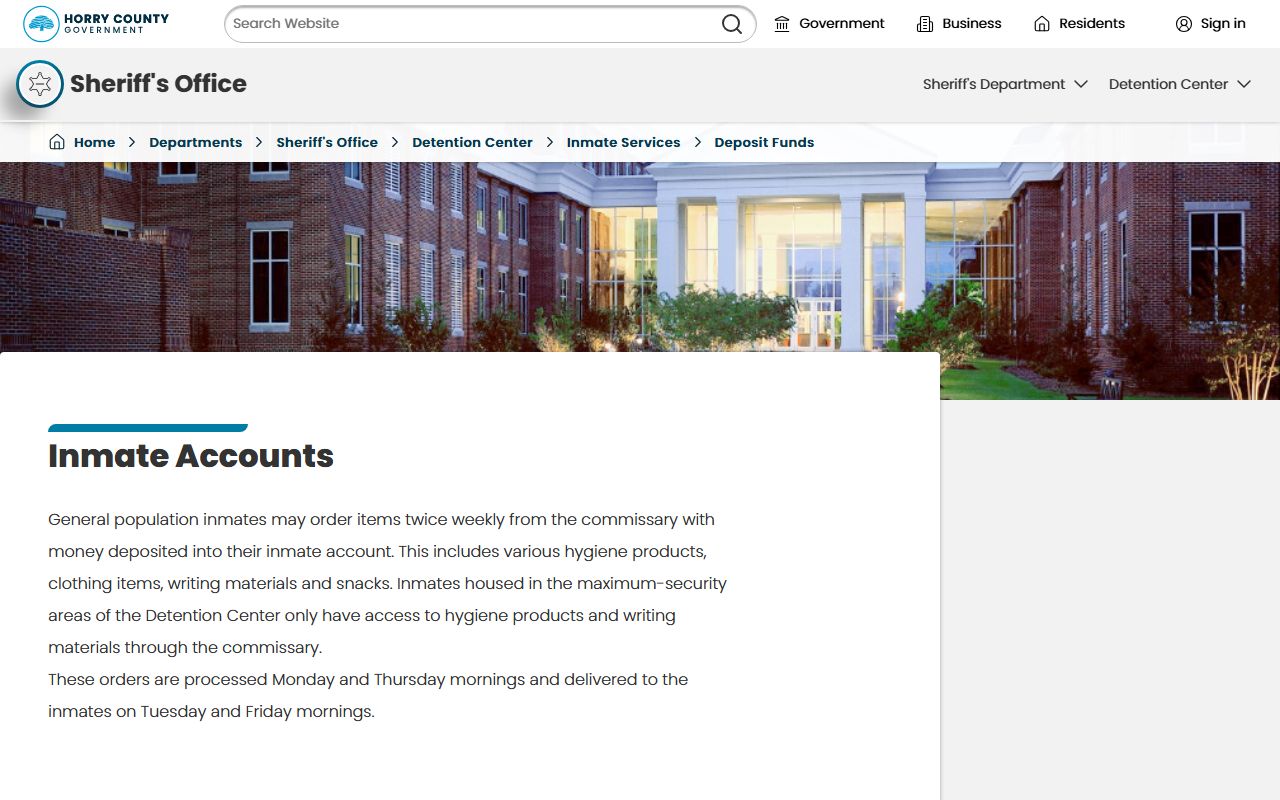
That page lists kiosk deposits, money order rules, and the days commissary orders are filled, all separate from any court docket entry.
Medical care in custody also runs apart from the court schedule. The county explains sick call, co-pays, and confidentiality on its inmate medical services page.
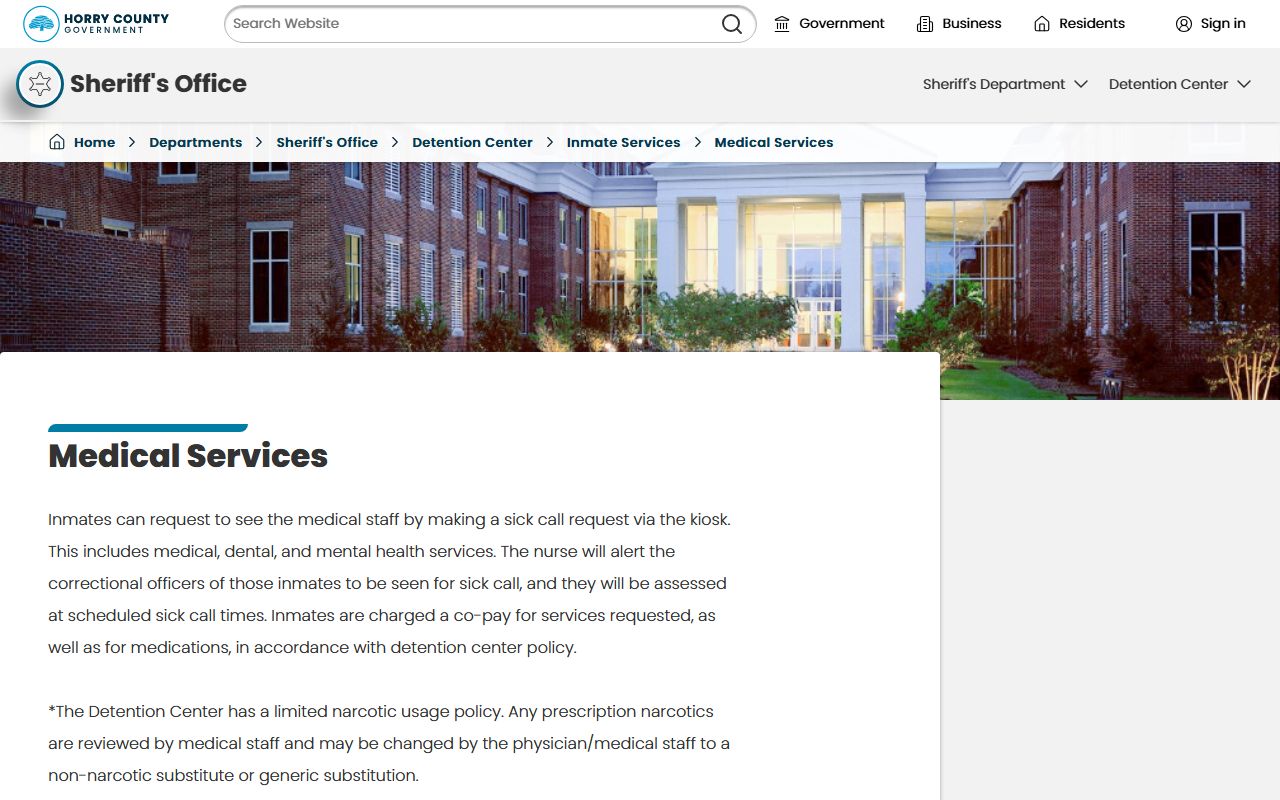
None of those medical entries show on a court docket, since HIPAA rules keep that data private and outside the public case record.
The jail also runs reentry and program work that a court may note as a condition but does not docket in detail. The county describes this on its inmate programs page.
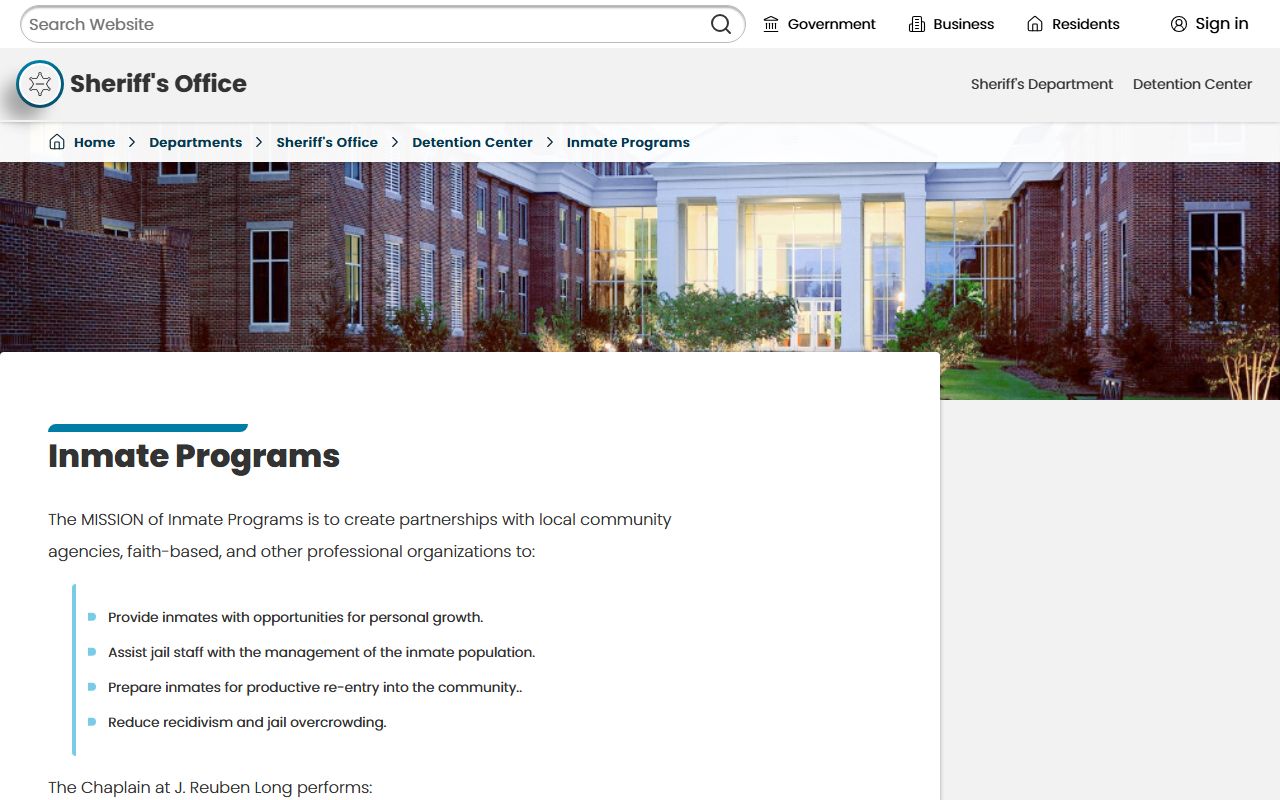
Those programs aim at reentry and lower repeat offending, and a chaplain handles religious requests, but the court docket only reflects orders, not the day-to-day program log. For jail roster lookups, see the Horry County inmate records page.
Criminal and Civil Dockets in Horry County
Criminal and civil dockets read a bit differently. A civil docket in Common Pleas tracks a complaint, answer, motions, and a judgment. A criminal docket in General Sessions tracks an indictment, arraignment, plea, and sentence. The Fifteenth Circuit Solicitor, Jimmy Richardson, prosecutes the serious criminal cases for Horry and Georgetown Counties.
Traffic and minor crime move through magistrate and municipal court dockets. These cases often resolve fast, sometimes in one date. DUI and serious traffic charges may route to the criminal side instead. For arrest and booking detail, the Horry County arrest records page is the better start. For citations and traffic dispositions, see the traffic court records page.
A docket entry is not a conviction by itself. A charge is only an accusation. A conviction is a guilty plea or a finding. The docket's disposition line tells you which one applies. When the docket is unclear, confirm the outcome with the clerk or the court before you rely on it.