
The South Carolina FOIA Framework for Horry County Records
South Carolina opens public records through the Freedom of Information Act, found in Title 30, Chapter 4 of the state code. The law starts from a simple idea. Public business should be done in the open. People should be able to learn what their government does at low cost and with little delay. Horry County is a public body under this law, so its departments, boards, and offices fall within reach of a request. Access is broad but not total. Some records are closed, redacted, or held back by other statutes.
The chapter has several key sections that shape how a request works. The short title at S.C. Code § 30-4-10 names the act. The findings section at § 30-4-15 spells out the open-government purpose. The definitions at § 30-4-20 set out what a public body and a public record are, and the terms reach broadly across county government. The core right sits at § 30-4-30, which lets a person inspect, copy, or get an electronic copy of a public record unless an exemption applies. That same section guides fees and response time.
Two more sections matter when records get sensitive or when a request is denied. Section 30-4-40 lists the exemptions, such as personal privacy, law-enforcement-sensitive files, attorney work product, trade secrets, security plans, and autopsy images. It also makes a public body separate the exempt parts from the open parts. Section 30-4-100 covers enforcement. If the county wrongly withholds a record, a requester may apply to the circuit court for relief. The state law text is the best source to confirm the exact wording.
The full FOIA text is worth a look before any large request. You can read the statute on the state legislature site at the South Carolina Freedom of Information Act page.
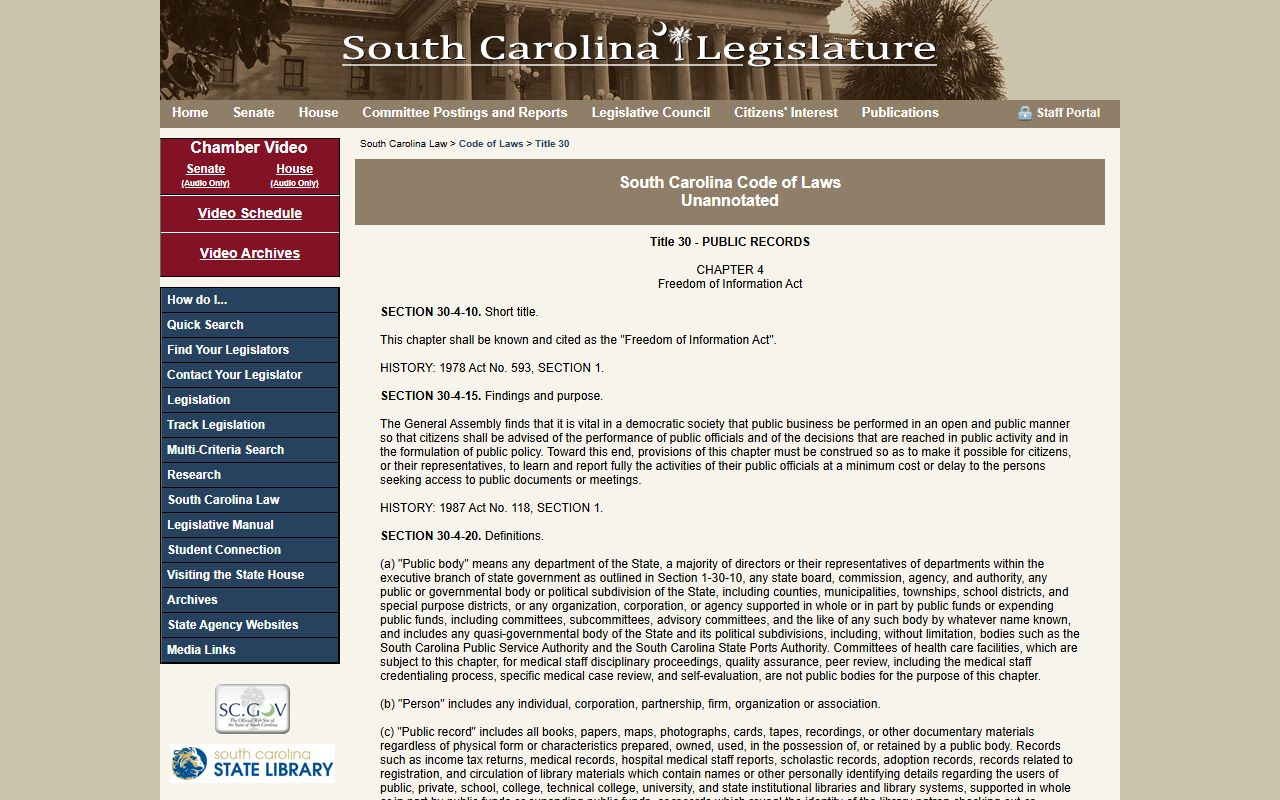
That page shows each numbered section, so you can check fee rules, exemptions, and the enforcement path in plain code language.
What Records Horry County Keeps Beyond the Courts
Court files are only one slice of the county's records. Several other offices hold papers the public uses every day. The biggest store of non-court records sits with the Register of Deeds, which records land documents. The Assessor and tax offices keep property values and tax bills. Vital records and 911 audio round out the common requests. Each office has its own rules and its own fees.
The Register of Deeds records and indexes land documents for the county. That office, led by Marion Dargan Foxworth, handles deeds, mortgages, plats, and many lien types. These are land records, not court records, and they have their own search. For a full breakdown of those filings and how to look them up, see the Horry County Register of Deeds page. The county notes that these records are not FOIA records, which matters for how you request them.
The list below shows the main non-court record groups and where they live.
- Land records - deeds, mortgages, plats, condo liens, tax liens, mechanics liens, easements, and HOA papers through the Register of Deeds.
- Property and tax records - parcel values, owner data, and tax bills through the Assessor and tax offices.
- Vital records - marriage licenses through Probate Court, with the state holding birth and death records.
- 911 audio and video - dispatch recordings and some department video, released through FOIA.
- Department administrative records - budgets, contracts, meeting files, and other county paperwork.
Marriage licenses and estate files come from Probate Court, while divorce files run through the Clerk. The marriage and divorce records page covers those in detail. Note: 911 audio and most county department records are FOIA records, but land records at the Register of Deeds are not.
Court Records Versus Administrative Public Records
The single most useful thing to know is which kind of record you want. Court records and administrative records take different paths. Mixing them up leads to wasted time and rejected requests. A court case is searched online or through the clerk who holds the file. An administrative record is requested through FOIA.
Court case access usually starts with the South Carolina Judicial Branch Public Index, the free statewide case search. From there you can pull Circuit Court, Family Court, magistrate, and many municipal cases. Certified copies of court files come from the office that keeps them, which for Circuit and Family Court is the Horry County Clerk of Court. For the full case-search walkthrough, see the Horry County court records page. A FOIA request is not the right tool for an active court case.
Administrative records are a different story. These are the county's own department files, not filed in a court. Budgets, contracts, policy memos, 911 recordings, and public-safety media records all fit here. Horry County runs these requests through its Public Information Office. That office posts the county FOIA fee schedule and explains the request methods.
The county Public Information page is the front door for most administrative requests.

That page also flags that Register of Deeds records are not FOIA records, which steers land-record seekers to the deeds office instead.
How to File a Horry County Public Records Request
A FOIA request to Horry County is not hard to file. You can submit it online or by mail. The key is to be clear about what you want and to give enough detail so staff can find the records. A vague request slows everything down. A focused request moves faster and often costs less.
The county handles administrative requests through the Public Information Office. Some public-safety records, such as incident reports and 911 audio, route through the Sheriff's own public information channel. Pick the office that holds the record you want. The steps below walk through a standard request.
- Decide if your record is administrative or a court file. Court cases go through the Public Index or the clerk, not FOIA.
- Pick the right office. Most county records go through the Public Information Office. Sheriff records may go through the Sheriff's public information channel.
- Write a clear request. Name the record, the dates, the department, and any case or report number you have.
- Submit it online through the county FOIA form or mail a written request to the proper office.
- Wait for the county's response and any fee estimate. Full payment is due before records are produced.
- Pay the quoted fee and pick up or receive the records once they are ready.
For law-enforcement records, the Sheriff's Office runs its own FOIA intake. You can review the rules on the Sheriff's Public Information Office page.
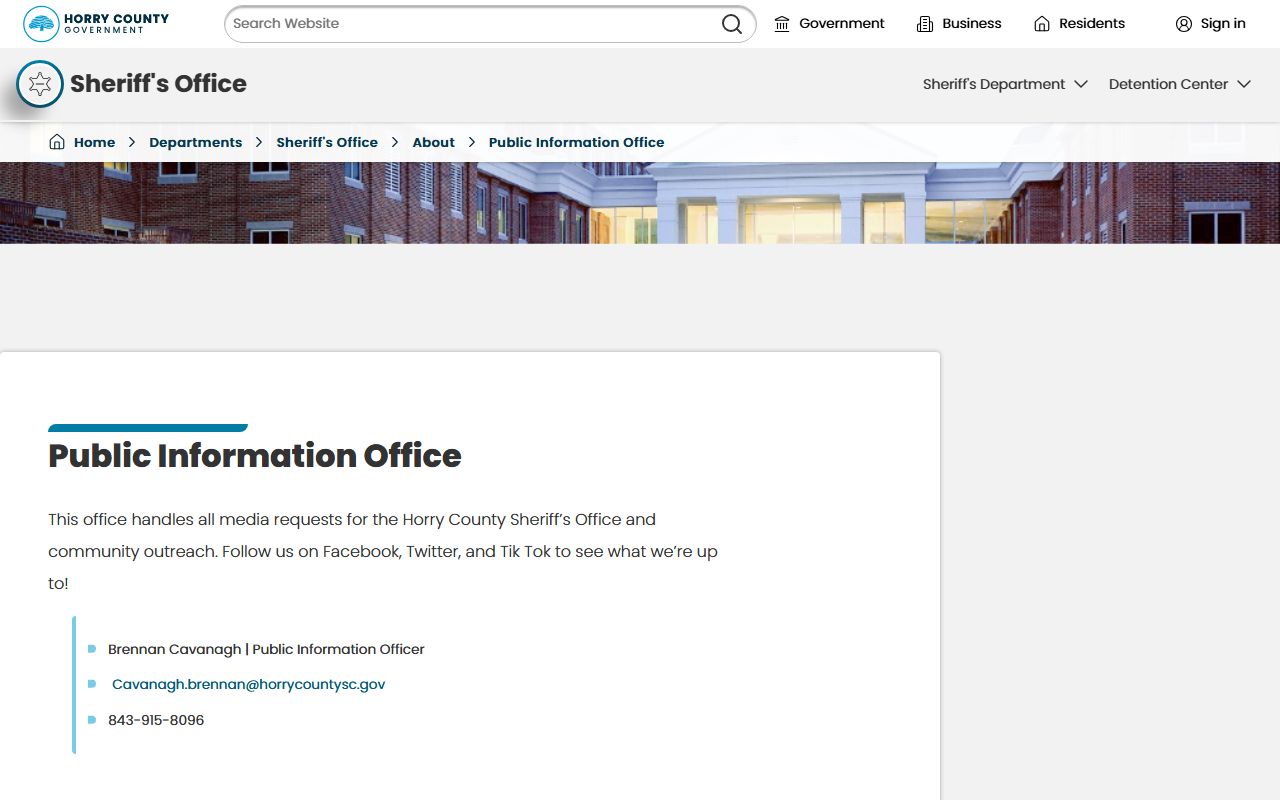
That page lists the media contact, the online and mail request options, and a notice about who may request records.
Horry County Public Records Request Routes
There is more than one way to send a request, and what you include shapes how fast it gets filled. The table below lays out the main routes and what each one needs. Online is quickest for most people. Mail works well when you want a paper trail or are sending a signed letter.
| Route | How It Works | What to Include |
|---|---|---|
| Online request | Submit through the county Public Information FOIA form. | Your name, contact email, the record sought, dates, and department. |
| Mailed request | Send a written letter to the proper county office. | Signed letter, return address, clear record description, dates, and any case or report number. |
| Sheriff records | Use the Sheriff's public information channel for law-enforcement files. | Incident or report number, date, location, and the names involved if known. |
Whatever route you pick, include the basics every time. A name to reach you. A clear record description. A date range. A report or case number if you have one. The more you give, the less back-and-forth you face. Vague requests get clarifying questions, and that adds days.
Horry County FOIA Fee Schedule
Horry County charges set fees to produce records under FOIA. These cover copies, staff time, and media like 911 audio or video. The amounts below come from the county's official FOIA page. They are separate from court copy fees and Probate Court fees, so do not assume one schedule covers every office.
| Item | Amount |
|---|---|
| Copy, 8.5x11 page | $0.15 per page |
| Staff search and review time | $25 per hour |
| 911 audio file | $25 per file |
| 911 audio on CD | $5 added for the CD |
| Video DVD | $15 per video |
One rule is firm. Full payment is due before the county produces the records. The county may give a fee estimate first, and large requests with lots of staff time can add up. The hourly staff charge applies when records take real time to find and review. You can confirm the current numbers on the Horry County Public Information page before you pay.
Court records run on their own fee track. Certified copies of Circuit and Family Court files come from the Clerk, and Probate Court has its own copy and certification fees. Note: keep three fee buckets in mind, the county FOIA schedule, Probate Court fees, and Clerk court-copy fees, since they do not overlap.
How Horry County Handles a FOIA Response
After you file, the county reviews the request and figures out what it can release. South Carolina FOIA sets the framework for how a public body responds. The county may produce the records, ask you to narrow the request, give a fee estimate, or cite an exemption for part of the file. A response is not always instant, and bigger requests take longer to gather.
When a record holds both open and closed material, the law does not allow a flat denial. Section 30-4-40(b) tells a public body to separate the exempt parts from the rest. So you may get a file with some lines blacked out rather than a refusal of the whole thing. Personal identifiers and law-enforcement-sensitive details are the usual things redacted.
If the county denies a request and you think that is wrong, the enforcement path runs through the courts. Under § 30-4-100, a requester may seek relief in the circuit court. This is not an appeal to the Attorney General. The court route is the formal way to challenge a denial under the act. Most requests, though, never reach that point.
Register of Deeds Records Do Not Need FOIA
Land records are a special case worth its own note. The Register of Deeds maintains an open, indexed set of recorded documents. Because these are already public recordings, the county says you do not need a FOIA request to get them. You can search and order copies through the deeds office directly.
This covers a long list of documents. Deeds and mortgages. Plats. Condominium liens. State and federal tax liens. Mechanics liens. Powers of attorney. Easements. HOA restrictions and amendments. All of these sit in the Register of Deeds index rather than in a court file or a FOIA queue. The Register of Deeds page explains the search and copy process for these land records.
So if you want a deed or a mortgage, skip the FOIA form. Go straight to the deeds office. It is faster and follows the office's own copy fees.
Who Can Request Horry County Public Records
FOIA access is broad, but it is not unlimited. South Carolina FOIA includes a limitation for people who are serving a prison sentence, which can restrict inmate requests for some records. The Sheriff's Office also states that it reserves the right to deny requests from people who are not citizens of South Carolina. These limits apply to the FOIA request process, not to every public court record.
It helps to keep two ideas apart here. Public court records and FOIA request eligibility are related but not the same. A court case in the Public Index is open to view by anyone, with no FOIA request and no citizenship test. A FOIA request for a county administrative record, by contrast, can carry the SC-citizen and inmate limits noted above. So the path you use changes what rules apply.
Note: a court case search and a FOIA request follow different eligibility rules, so check which one fits your need before you start.
Privacy Rules and Redaction in Horry County Records
South Carolina protects personal data even within open records. The Family Privacy Protection Act, found in Title 30, Chapter 2, defines the kinds of personal information that get shielded. This includes Social Security numbers, dates of birth in sensitive settings, driver identifiers, home addresses, medical and disability data, financial account numbers, and biometric details. A public body should not hand these out just because they sit inside a public file.
This is why redaction is so common. When a record contains both open and protected data, the county separates the two and releases the open part. You get the substance of the record with the personal identifiers removed. This matches the FOIA exemption structure and the privacy act's intent. It is a release with protection, not a refusal.
You can read the privacy law text on the state legislature site at the South Carolina Family Privacy Protection Act page.
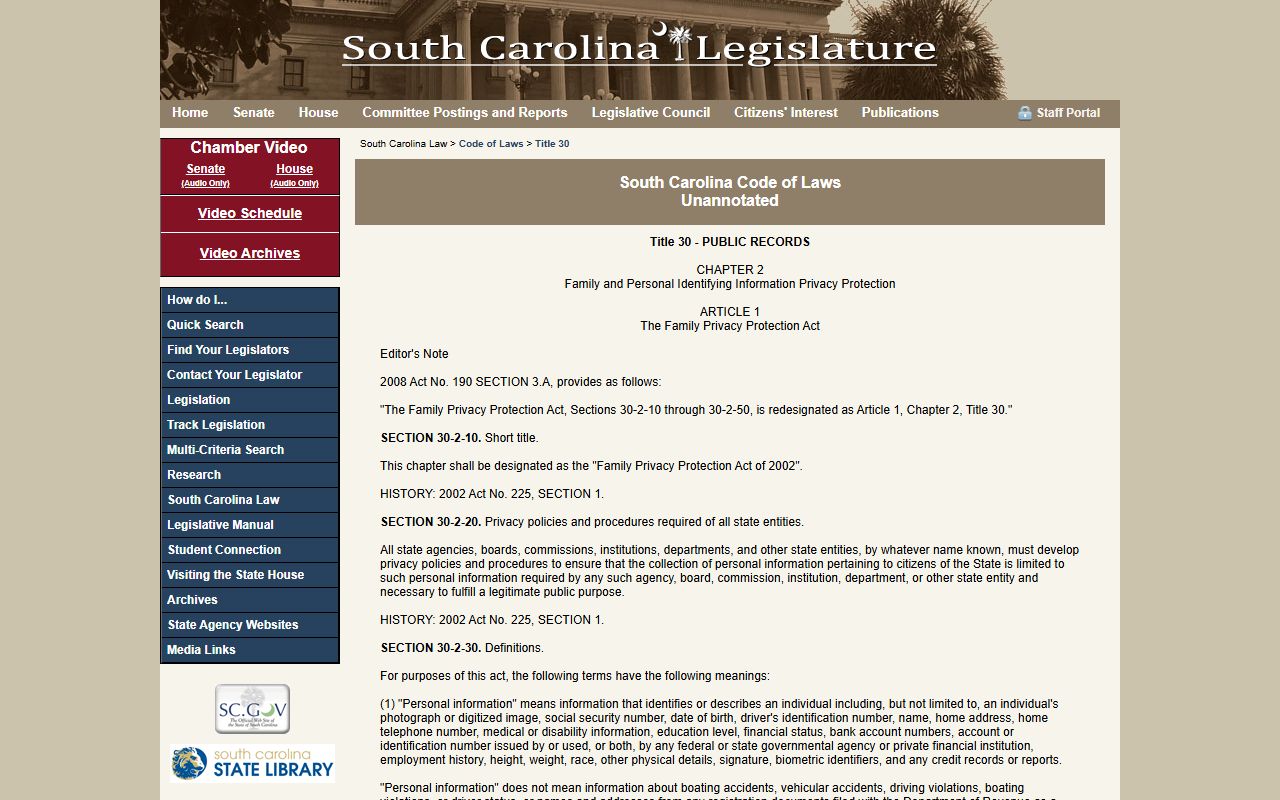
That page defines personal information in detail, which helps explain why certain fields come back blacked out.
Sealed, Expunged, and Closed Horry County Records
Some records are closed no matter how you ask. Juvenile cases, adoption files, and mental health commitments are restricted by law. Sealed civil settlements and expunged criminal records do not show in public searches. These limits sit on top of the FOIA exemptions, and they apply to both court records and administrative records.
Court sealing follows its own rule. South Carolina Rule of Civil Procedure 41.1 sets the bar a court uses before it seals a settlement or document, and it leans on the state's open-court tradition. Sealing is meant to be the exception, not the default. You can review the rule on the South Carolina Rule 41.1 page.
The court rule on sealed filings spells out the standard.
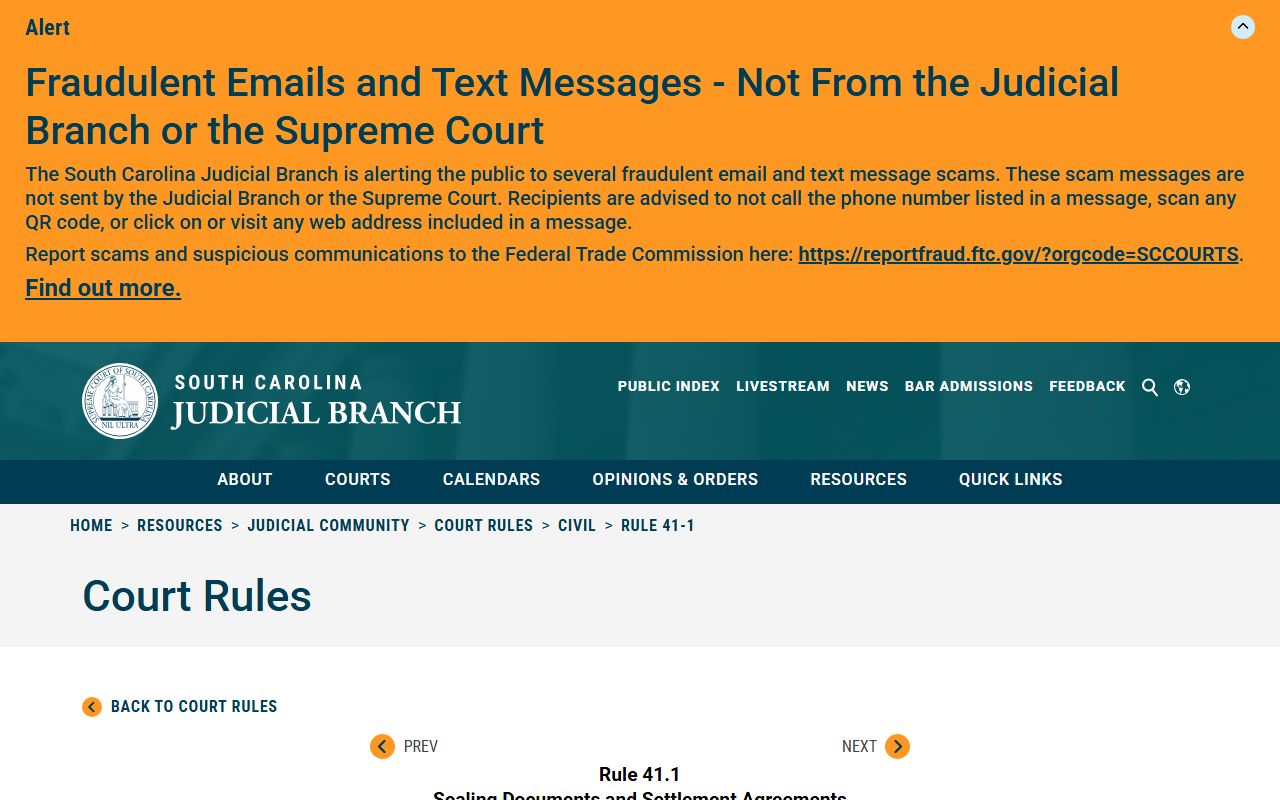
It is one rule among several, though, since juvenile, adoption, and medical sealing rest on different statutes.
Expungement is a separate track. Eligible records can be removed from public access under Title 17, Chapter 22. Horry County expungements run through the Fifteenth Circuit Solicitor's Office, which screens each case against category rules. Once a court orders an expungement, public records of the case should no longer appear. For the eligibility categories tied to arrest and criminal files, see the Horry County arrest records page.
The expungement statute lays out the procedures and categories.
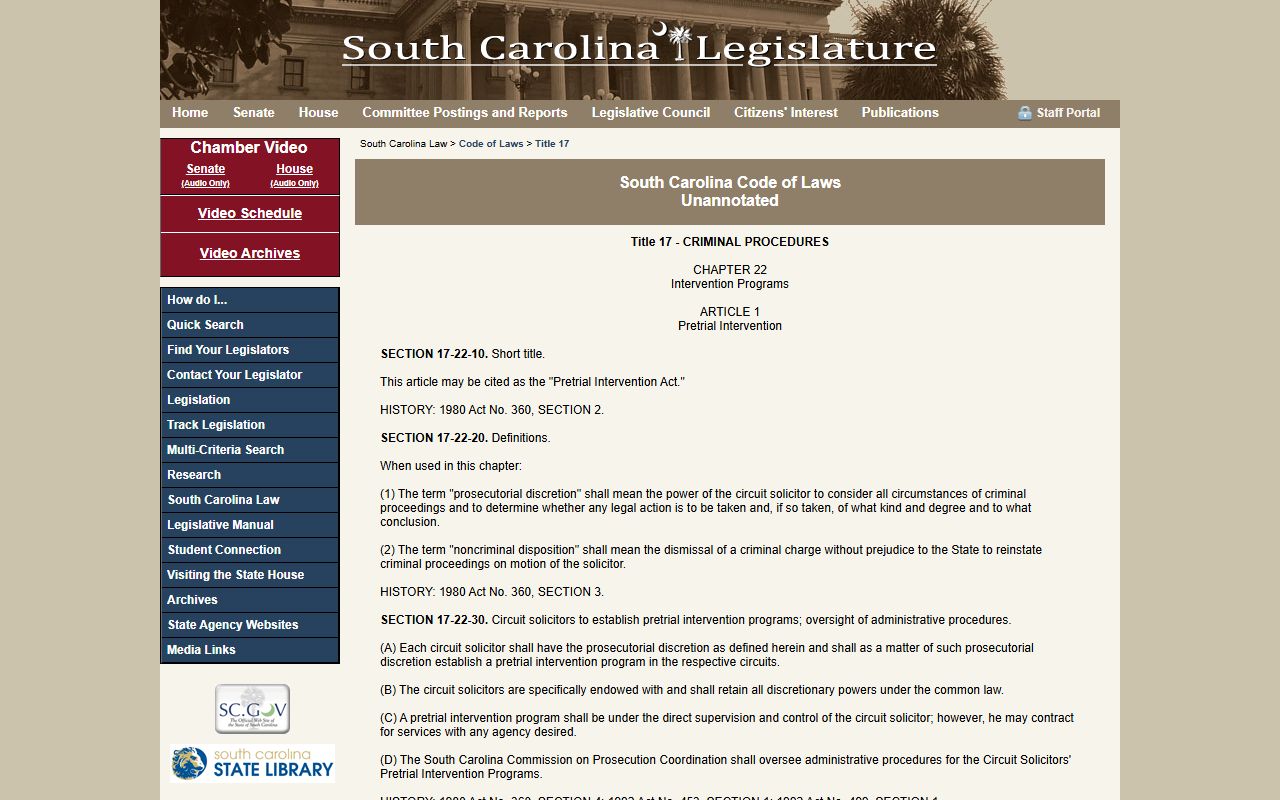
You can read the full procedure on the South Carolina Title 17, Chapter 22 page, which covers intervention programs and expungement steps.